Static Electricity Measurement: Why It's Step One | Merasia
Aug 12, 2026
Share to
staticelectricitymeasurement
Share to
Something on your production line feels off. Sheets won't separate cleanly, film starts misaligning, or labels refuse to feed consistently. These problems often look random — but in many converting, printing, packaging, and electronics assembly environments, there's an invisible cause behind them: uncontrolled static charge.
Static electricity often goes unnoticed until it's already affecting yield, quality, or throughput — and that's where most manufacturers make their first mistake: they jump straight to a fix. An ionising bar gets installed. Maybe it helps. Maybe it doesn't. Maybe the problem simply resurfaces somewhere else on the line. Without a baseline static charge measurement, there's no way to confirm the fix is working — or whether the right point in the process was even being treated.
Measuring static electricity isn't just a diagnostic step — it's the foundation of any effective static control strategy.
The Invisible Culprit Behind Production Defects
Static charge is one of the hardest process variables to troubleshoot because it can't be seen, smelled, or sensed directly. Its effects — misfeeds, jams, contamination, dust attraction, ESD damage, even fire risk in hazardous areas — are obvious. The charge itself isn't.
This is why relying on instinct alone rarely works. A problem that appears "at the output" may actually originate several metres upstream. What looks like a grounding fault may in fact be a charging issue caused by friction at a nip point. Without a static charge meter, you're guessing at both the cause and the location.
What a Static Measurement Actually Tells You
A static meter gives you two essential readings:
Magnitude — the charge level, measured in kilovolts (kV)
Polarity — whether the surface is positively or negatively charged
Both matter. A surface charged at +8 kV and one at -8 kV look identical to the eye but behave very differently. Polarity determines whether two surfaces attract or repel — often the exact mechanism behind jamming, misfeeding, or contamination issues on-line.
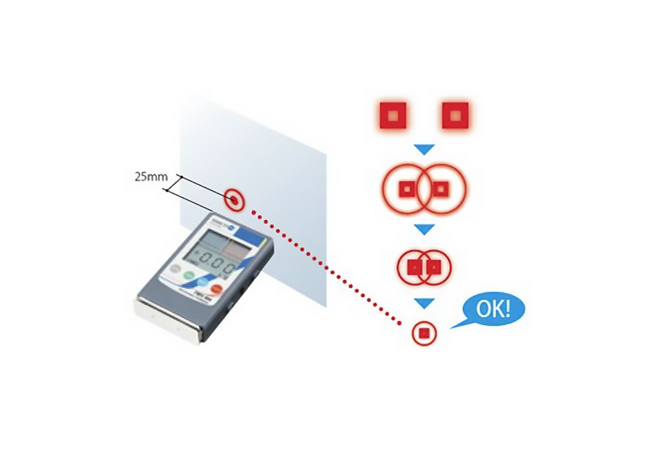
Measurement also reveals where charge is building up. Whether you're scanning a web path with a handheld unit like the FMX-004 Static Charge Meter, or monitoring continuously with in-line sensors, pinpointing the true source is rarely where operators first suspect.
Handheld vs. Inline Static Measurement: Choosing the Right Approach
Handheld static meters are ideal for initial investigations and periodic audits. Walk the line, probe multiple points, and build a real picture of where and how charge accumulates under different run conditions — the TensION Voltage Tester and FMX-004 are built for exactly this kind of on-the-floor diagnostic work.
Inline static measurement suits continuous, high-speed production — particularly in converting, printing, and web-handling environments. Sensors mounted across the web width provide real-time charge data that can be logged, trended, and fed directly into an active ionisation control system for automatic adjustment.
Many operations use both: handheld meters to map the problem initially, inline sensors for ongoing process control once a solution is installed.
Measurement Closes the Loop on Static Control
The final — and most overlooked — reason to measure: it's the only way to verify your static control solution is actually working.
After installing ionising bars or other static eliminators, a follow-up measurement confirms whether charge levels have dropped into an acceptable range. If not, you know exactly where to look next. If they have, you now have documented proof — useful for quality records, customer audits, or ESD compliance requirements in electronics and hazardous-area applications.
Controlling static without measuring it is like adjusting a thermostat with no thermometer. You might land somewhere comfortable eventually — but you'll never know why it worked, or whether it'll hold under different conditions.
Merasia supplies both handheld and inline Simco-Ion static measurement solutions across Southeast Asia, India, Australia, and New Zealand. If you're not sure where static is impacting your line, get in touch — our team can help you map your process and identify the right measurement approach for your application.
Teknek (ITW Inc.), the world leader of contact cleaning technology, has launched a significant range extension to its successful Tek-BC board cleaning range.
Teknek (ITW Inc.), the world leader of contact cleaning technology, has launched a significant range extension to its successful Tek-BC board cleaning range.